July 1, 2026
Why We Still Use Mortise and Tenon Joinery
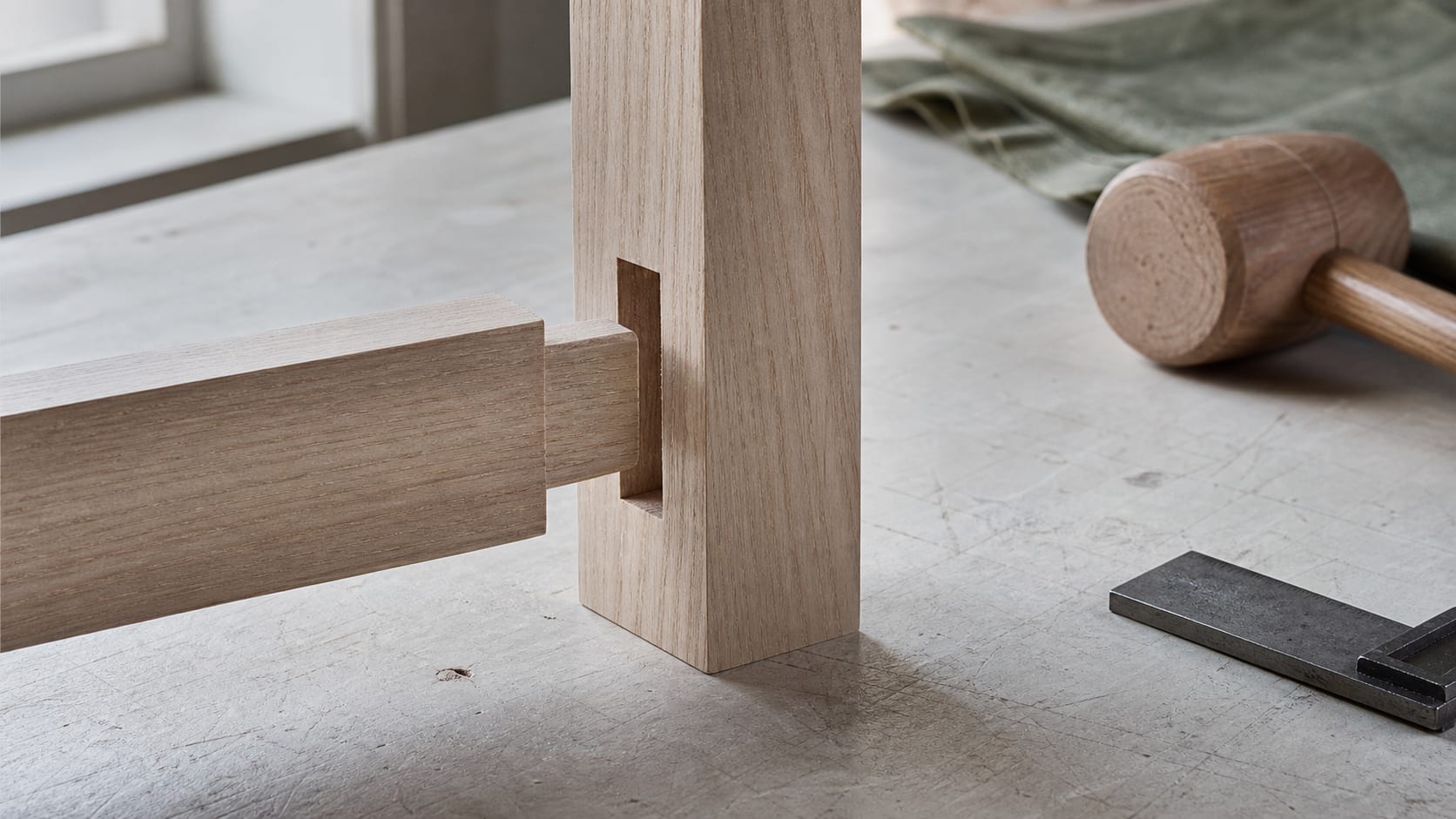
Traditional joinery relies on mechanical lock rather than chemical bond. The mortise and tenon joint has been used for thousands of years because it maximizes the surface contact between two pieces of wood.
When glue fails over decades, a mortise and tenon joint still holds mechanically. Dowels and screws concentrate stress in a single point, eventually splitting the wood grain, whereas a tenon distributes load across the entire width of the rail.
We cut every tenon by hand and test the fit before gluing. It is slow, but it ensures that the chair or table you buy today remains rock-solid for the next generation.