The acoustics of silence.
By Julian Vance
J
Julian Vance
2 min read
Designing spaces that offer psychological refuge from the noise of modern life.
Acoustic engineers have a term for the quietest room ever built: an anechoic chamber, so free of reflected sound that visitors report hearing their own heartbeat within minutes. Few of us need that extreme, but the instinct behind it - the search for a genuinely quiet room - is showing up everywhere from libraries to airports.
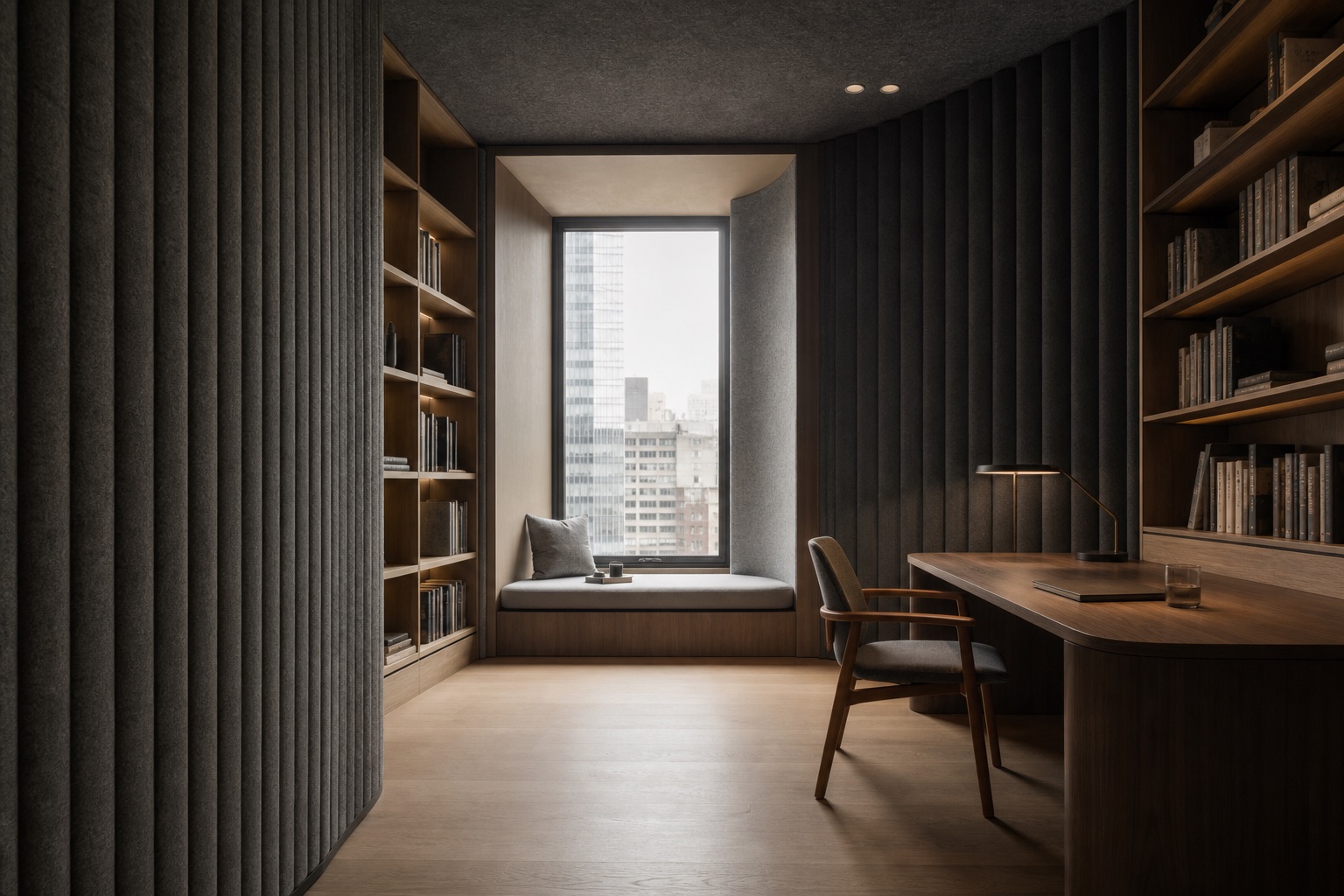
Designers are borrowing techniques once reserved for recording studios: soft-close doors, felt wall panels, staggered layouts that break up sound paths before they can travel far. None of it is visible in a finished space, which is exactly the point.
Acoustic engineers have a term for the quietest room ever built: an anechoic chamber, so free of reflected sound that visitors report hearing their own heartbeat within minutes.
The payoff isn't just comfort. Studies on open-plan offices consistently link uncontrolled ambient noise to measurable drops in concentration and memory recall. Silence, it turns out, is a feature worth engineering for.